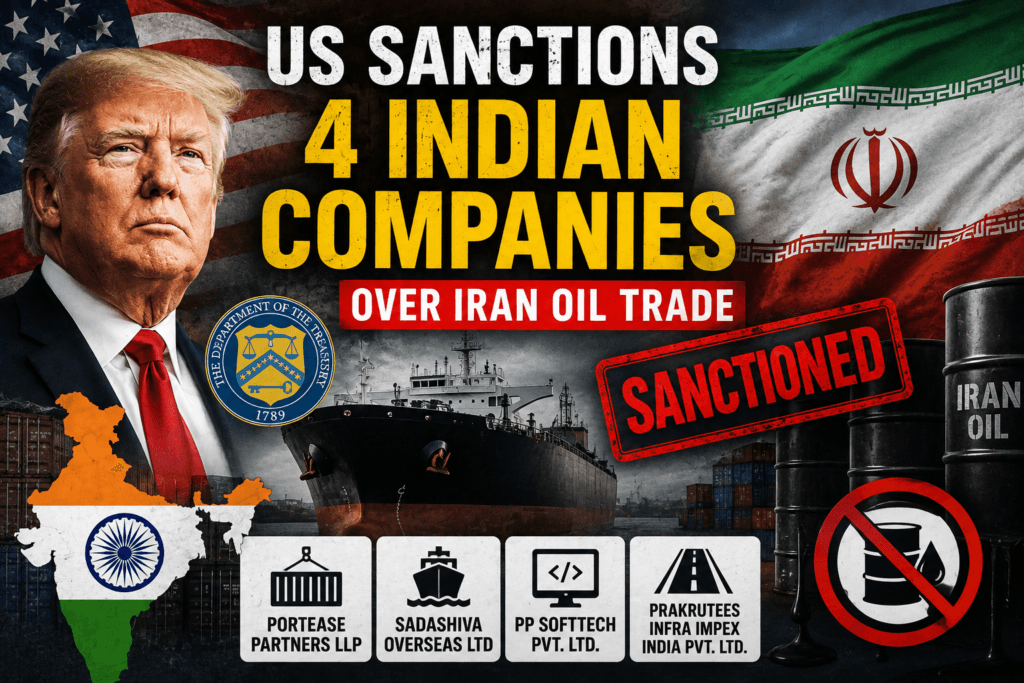
US Sanctions have hit India hard as the United States has expanded President Donald Trump’s economic pressure campaign against Iran, sanctioning four India-based companies over their alleged involvement in Iranian petroleum and petrochemical trade.
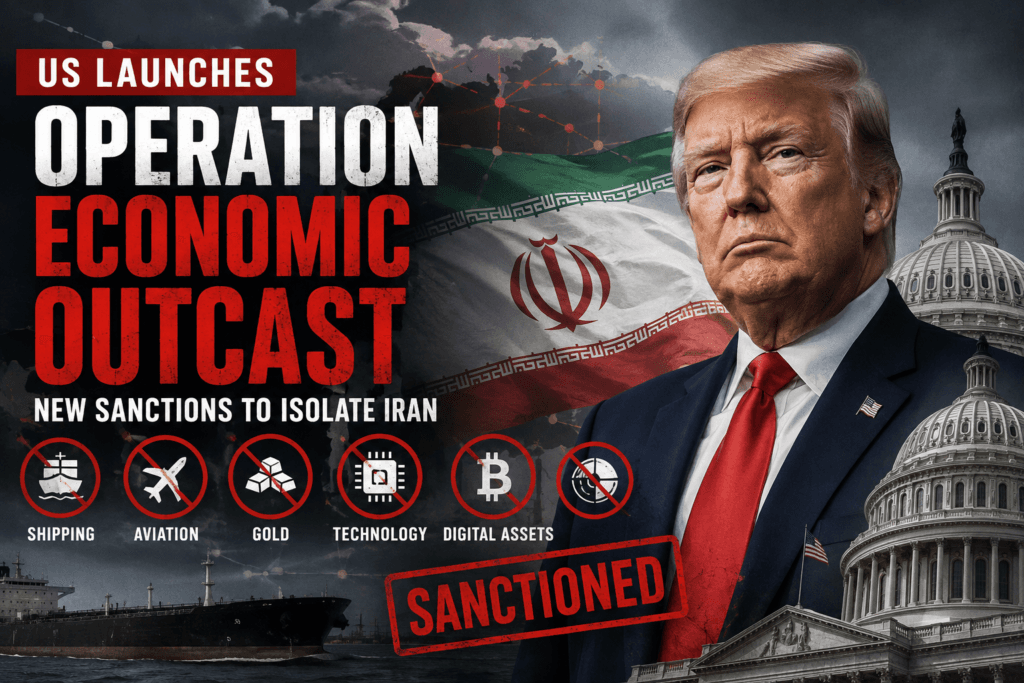
The move comes just a day after US Treasury Secretary Scott Bessent announced “Operation Economic Outcast,” a major campaign designed to isolate Iran economically and disrupt the networks Washington says are helping Tehran generate revenue.
The latest action demonstrates that Washington’s sanctions campaign is not limited to Iranian entities. Companies in third countries that continue doing business connected to Iran’s energy sector could also face penalties.
Why Were Indian Companies Sanctioned?
According to reports, the four India-based companies were targeted over alleged participation in Iran-related petroleum and petrochemical transactions. One of the companies, Prakrutees Infra Impex, was accused by authorities in Washington of importing approximately $25 million worth of Iranian-origin petroleum products from multiple Iranian companies.
The sanctions are part of a wider effort to disrupt Iran’s ability to earn foreign currency through oil and petrochemical exports.
What Is Operation Economic Outcast?
Operation Economic Outcast is the Trump administration’s latest attempt to economically isolate Iran. Bessent said the campaign would focus on several sectors, including shipping, aviation, technology, gold and digital assets, while targeting networks involved in Iran’s oil revenues, weapons-related procurement and other activities Washington considers a threat. The Treasury Department said the broader action announced on August 24 covered more than 60 entities, individuals and vessels.

The strategy is based on a familiar feature of United States’ sanctions policy: companies may face restrictions not only for dealing directly with Iran but also for facilitating transactions that Washington considers sanctionable.
Why India Matters
The sanctions put Indian businesses in a difficult position. India maintains longstanding economic and strategic ties with both the United States and Iran. New American restrictions could increase compliance risks for Indian shipping companies, traders, insurers and financial institutions involved in legitimate trade with Iran.
The development also comes at a sensitive time for India’s energy security because Iran and the wider Middle East remain important factors in global oil markets.
Will India-US Relations Be Affected?
The sanctions do not automatically represent a new diplomatic crisis between New Delhi and Washington. However, they highlight the complications created by America’s increasingly aggressive secondary-sanctions policy.

India has traditionally sought strategic autonomy in dealing with major powers, while Washington is demanding that countries and businesses reduce economic interaction with Tehran.
The situation could become more complicated if Washington expands sanctions to additional Indian companies or financial institutions.
What Happens Next?
Washington has signalled that more sanctions could follow. Iran, meanwhile, has vowed to resist the expanded campaign and warned that countries supporting the US pressure could face consequences.
For India, the key question will be whether the latest action remains limited to specific companies or becomes part of a wider US crackdown on Indian-Iranian commercial ties.