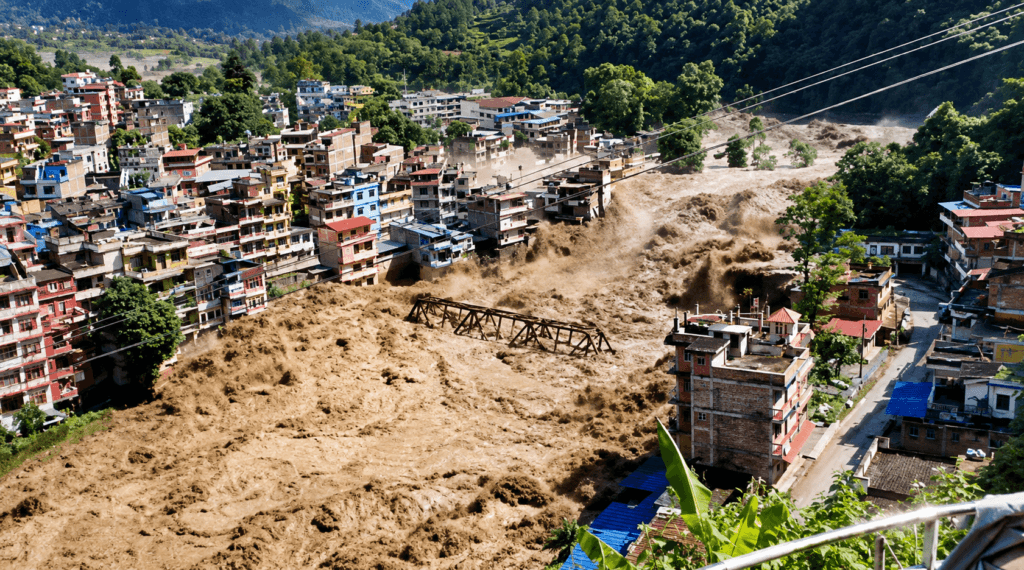
Nepal is facing one of its most devastating natural disasters of 2026 after a massive flash flood swept through communities along the Nepal-Tibet border on Wednesday, August 26, killing at least 98 people and leaving hundreds missing.
The disaster struck the Bhote Koshi River system in northern Nepal, with the worst destruction reported in Rasuwa, Nuwakot and Dhading districts. Homes, vehicles, bridges, roads and power infrastructure were swept away or buried beneath mud and debris.
Authorities are still conducting search-and-rescue operations, meaning the death toll and number of missing people could change significantly.
Hundreds of Tourists Missing In Nepal Including 105 Indians
One of the most alarming aspects of the Nepal floods is the large number of travellers caught in the disaster. Nepal’s Tourism Board has reported 384 travellers as missing, including 291 foreign nationals and 93 Nepalis. Among the foreign nationals are 105 Indians, along with travellers from the United States, United Kingdom, Australia, Malaysia, the Netherlands and South Africa.

The affected region is an important route for people travelling toward Mount Kailash and Mansarovar in Tibet, making the disaster particularly significant for Indian pilgrims and international tourists. Authorities have stressed that the missing-person figures are preliminary and that efforts are continuing to verify the whereabouts of those listed.
What Caused the Nepal Flash Flood?
The precise chain of events is still being investigated. Nepal’s Foreign Minister Shishir Khanal said an earthquake occurred at around 8:37 a.m. and appeared to trigger a major landslide that blocked the river, causing water to surge downstream. A 4.4-magnitude earthquake was recorded in the region around the same time.

Satellite analysis by Planet Labs, cited by Nepal’s National Disaster Risk Reduction and Management Authority, indicated a snow-and-rock landslide may have triggered a debris-filled flood in the Lhende River. Researchers have also examined the possibility of an ice-rock avalanche or glacier collapse.
The exact contribution of the earthquake, landslide, ice and rainfall therefore remains under assessment.
ALSO READ: Assam Floods 2026: Death Toll Reaches 98, Why This Year’s Deluge Has Become So Devastating?
Roads, Bridges and Power Projects Destroyed
The flood caused extensive infrastructure damage. Several bridges were washed away, while roads connecting communities in the Himalayan region were severely damaged. Electricity infrastructure was also hit, with Nepal’s Electricity Authority estimating that approximately 430 megawatts of generation capacity, including hydropower and solar facilities, was affected.

The destruction has made rescue operations extremely difficult. Nepal Army helicopters have been deployed to evacuate survivors and search for missing people. More than 100 people had been rescued from one of the worst-hit areas by Wednesday, according to Nepal’s prime minister’s office.
China Also Reports Casualties
The disaster crossed the border into China’s Tibet region. Chinese authorities reported three deaths and 265 people missing in the Gyirong area after a mudslide struck the border port. Roads, communications and electricity links were damaged, while Chinese authorities deployed drones and prepared aircraft and helicopters for rescue operations.
India Issues Flood Alerts
The effects are also being felt downstream in India. Flood alerts were issued in Uttar Pradesh and Bihar, where rivers flowing from Nepal can rapidly rise following major flooding in the Himalayan foothills.
Authorities in Bihar had already evacuated around 5,000 people from six districts, with plans to move additional residents from vulnerable areas.
Risk of Another Flood
Officials and experts have warned that the danger may not be over. A blockage remains upstream, raising concerns that another sudden release of water could produce a second major flood wave. Residents living near the Bhote Koshi and Trishuli river systems have been warned to move to safer locations.
The disaster also highlights Nepal’s broader vulnerability to floods and landslides during the South Asian monsoon. Experts say the combination of intense rainfall, fragile Himalayan terrain, rapid development and a changing climate is increasing the risks faced by mountain communities.
What Happens Next?
Search-and-rescue operations remain the immediate priority, with authorities attempting to reach isolated settlements and establish the whereabouts of hundreds of missing people.
The Nepal floods of 2026 have already become a major humanitarian emergency, but the full scale of the disaster is still emerging. With roads destroyed, communications disrupted and another flood possible, authorities face a race against time to rescue survivors and account for those still missing.