Delhi witnessed heightened security on October 2 as protesters gathered around Jantar Mantar over the Election Commission’s Special Intensive Revision (SIR) of electoral rolls and demanded the resignation of Chief Election Commissioner Gyanesh Kumar.
The mobilisation, described by organisers as “Jantar Mantar 2.0”, brought together political leaders, student activists and members of different groups. Police had not granted permission for the planned demonstration and imposed restrictions across parts of central Delhi.

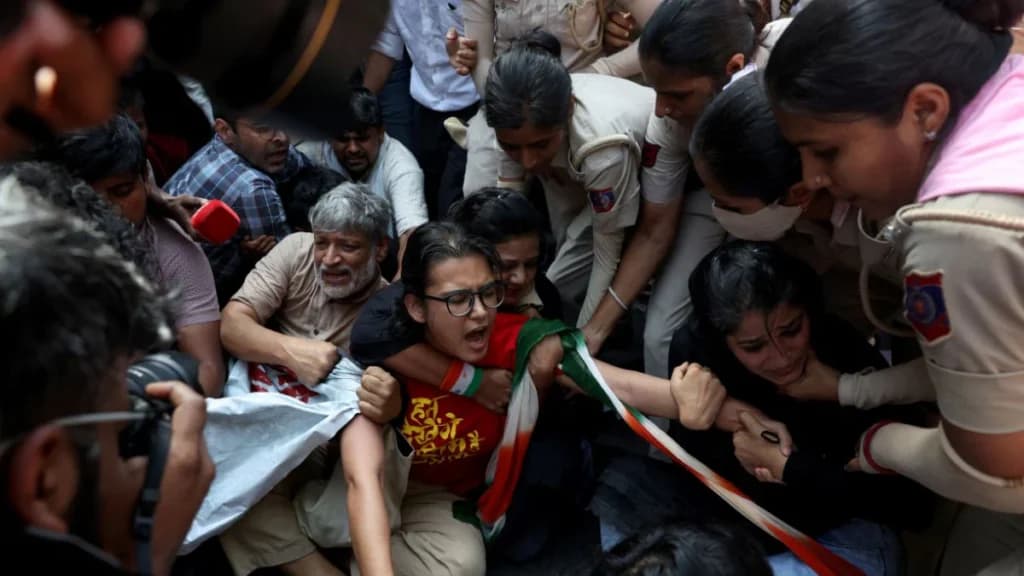
As security measures intensified, entry and exit at 12 Delhi Metro stations were closed, internet services were reportedly suspended around the protest area and hundreds of protesters were detained. Later reports put the number of detainees at more than 700.
The central issue behind the demonstration was the Special Intensive Revision of electoral rolls, or SIR. Protesters and opposition groups have raised concerns about the process of verifying voters and removing names from electoral rolls. They have demanded greater transparency and accountability from the Election Commission.
The Cockroach Janta Party, which promoted the Jantar Mantar 2.0 campaign, listed three major demands: the resignation of Gyanesh Kumar, a halt to SIR and changes to the law governing the appointment of Election Commissioners.

The Election Commission has defended the SIR exercise and rejected allegations of wrongdoing.
Why did Delhi Police restrict the protest?
Delhi Police said permission had not been granted for the demonstration and imposed restrictions under Section 163 of the Bharatiya Nagarik Suraksha Sanhita (BNSS) in the New Delhi district. The restrictions covered public gatherings, demonstrations, processions and dharnas without prior permission.
Police also erected barricades on several roads leading towards Jantar Mantar, including routes around Sansad Marg, Janpath and Tolstoy Marg. Authorities deployed thousands of police personnel and Central Armed Police Forces in the area as a precaution.
More than 700 protesters detained
The police action led to widespread detentions. Reports said more than 700 protesters had been detained from Jantar Mantar and surrounding areas as groups attempted to reach the protest site. Among those detained were AAP leaders Saurabh Bharadwaj and Sanjeev Jha, along with student activists and members of other organisations.
View tweet
AAP criticised the detentions and said its leaders were attempting to participate in a peaceful demonstration. Police maintained that the gathering did not have the required permission.
12 Delhi Metro stations shut
The security restrictions also affected Delhi Metro commuters. The Delhi Metro Rail Corporation closed entry and exit at 12 stations following directions from Delhi Police.
The affected stations included Rajiv Chowk, Central Secretariat, New Delhi, Janpath, Patel Chowk, Mandi House, INA, Barakhamba Road, Lok Kalyan Marg, Seva Teerth, Chawri Bazar and Ramakrishna Ashram Marg.
‘

The entire Metro network was not shut down. Interchange facilities remained available at several stations, including Rajiv Chowk, Central Secretariat, Mandi House and New Delhi.However, commuters travelling through central Delhi were advised to plan alternative routes because they could not enter or exit at the affected stations.
Internet services suspended around protest area
Internet services were also reportedly suspended or disrupted in the vicinity of Jantar Mantar and parts of central Delhi during the security operation.The reported restriction was localised and should not be confused with a citywide or nationwide internet shutdown.
The Internet Freedom Foundation said it was seeking information about the order behind the reported suspension. The internet disruption added to the restrictions already affecting movement and public gatherings around the protest site.
ALSO READ: Modi Govt. Sacks 47 NTA Officials, Approves Anti-Paper Leak Bill As CJP Protests Intensify
Why is Gyanesh Kumar facing protests?
Gyanesh Kumar has become the focus of political criticism amid the continuing SIR controversy. Opposition parties and protest organisers have questioned the manner in which electoral rolls are being revised and have raised concerns about possible exclusion of eligible voters.
The controversy has also been fuelled by reports of disagreements among Election Commissioners over aspects of the SIR process. The Election Commission has maintained that electoral-roll revision is part of its constitutional responsibility and has defended the process.

The Supreme Court is separately considering legal challenges connected with the functioning of the Election Commission and SIR.
What are protesters demanding?
The demands vary between organisations, but the main issues include:
- Resignation of CEC Gyanesh Kumar
- A halt or freeze on the SIR exercise
- Greater transparency in voter-roll revision
- Restoration or protection of voter names allegedly removed during the revision
- Changes to the legal framework governing the appointment of Election Commissioners
The organisers have described the mobilisation as a peaceful protest against what they consider concerns surrounding the electoral process.
The government’s and Election Commission’s positions differ from these claims.
Why October 2 is significant
The protest took place on Gandhi Jayanti, marking the birth anniversary of Mahatma Gandhi. Organisers said the date was chosen to highlight peaceful protest and civil resistance.
However, because Delhi Police had not granted permission for the proposed demonstration, authorities imposed restrictions and increased security around Jantar Mantar. This resulted in a confrontation between protesters attempting to reach the site and police personnel enforcing the restrictions.
What happens next?
The Jantar Mantar protest is unlikely to end the wider dispute over SIR. Further demonstrations are expected, while legal proceedings concerning the Election Commission and electoral-roll revision are also continuing.
The immediate focus will be on whether political groups announce additional protests and whether the Election Commission makes any changes to the SIR process. The Supreme Court proceedings could also become important as petitioners challenge aspects of the Election Commission’s functioning.