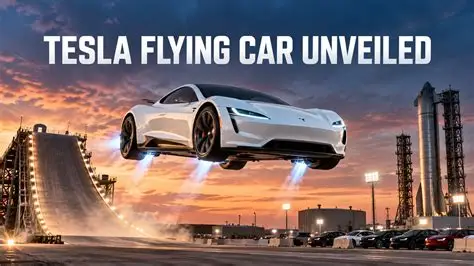
TEXAS, October 16, 2026: Tesla CEO Elon Musk has unveiled a redesigned Roadster electric sports car featuring rocket-style thrusters that allow the vehicle to briefly lift off the ground, reviving his long-running promise of a car with flying capabilities.
The demonstration took place at a SpaceX facility in Texas on October 15 and was livestreamed online. The vehicle appeared to travel along a curved ramp before launching into the air and rotating before landing on its wheels.
Musk described the technology as proof that flying cars were becoming possible, although the demonstration involved a specialised sports car using high-pressure gas propulsion rather than a conventional aircraft capable of sustained flight.
View tweet
Tesla has indicated that production is targeted for 2028, leaving questions about final specifications, safety certification, pricing and the practical availability of the flying-capable version
ALSO READ: Trump Xi meeting: 5 Key Takeaways After US-China summit
How does Tesla’s flying Roadster work?
The redesigned Roadster uses thrusters powered by compressed gas, according to Tesla and reporting from the launch event. The system is intended to generate thrust that can briefly lift the vehicle into the air.
Tesla engineering head Lars Moravy described the thruster technology during the presentation. Musk said the system could also generate downward force to improve the car’s handling and cornering performance.
The demonstration showed the vehicle performing an aerial manoeuvre, but it should not be confused with a conventional flying car designed for routine travel through the air.

A production vehicle would need to meet applicable safety and regulatory requirements. Details about the final configuration, operating limits and certification of the thruster-equipped model remain important questions.
What did Tesla show at the launch event?
The event showcased the new Roadster at a SpaceX test facility in Texas. In the demonstration, the vehicle moved along a curved ramp before lifting into the air and rotating.
The display was designed to highlight the capabilities of the car’s propulsion system and its relationship with SpaceX technology.
The launch also renewed attention on the next-generation Roadster, which Tesla first announced in 2017. The car’s development has faced repeated delays, and the latest presentation did not eliminate uncertainty over when customers will receive production vehicles.
When will new Roadster go on sale?
Tesla has targeted 2028 for production of the redesigned Roadster. However, a production target is not the same as a confirmed customer-delivery date.
The company has presented different versions of the vehicle, including a road-focused Performance model and more specialised variants associated with the thruster technology.
According to Wired, the company’s announced lineup includes Performance, Thrust and Rocket versions, with the most specialised configuration intended to offer the flying capability.
The final specifications, prices and delivery schedule remain subject to change. Buyers should check Tesla’s official website for the latest reservation terms and model availability.
Is Tesla’s Roadster really a flying car?
The vehicle has demonstrated an ability to lift off the ground using thrusters, but describing it simply as a flying car can be misleading.
Traditional flying cars are generally expected to provide some form of sustained or controlled flight, often using wings, rotors or other lift systems. Tesla’s demonstration instead involved a specialised propulsion system capable of briefly moving the car through the air.
The company has not demonstrated that the vehicle can operate as an everyday road-and-air transport system. Questions about safe take-off and landing, control in different conditions, public-road legality and aviation regulation remain unresolved.
For now, the Roadster is best described as an electric sports car with experimental flying capability.
Can Tesla’s flying Roadster change the future of transport?
The demonstration has renewed interest in the broader flying-car industry, where companies are developing electric vertical take-off and landing aircraft, hybrid vehicles and other new forms of mobility.
However, these technologies face major hurdles, including battery performance, noise, infrastructure, safety certification and regulatory approval.
Tesla’s approach is different from that of companies developing aircraft designed for routine passenger transport. Its Roadster demonstration focuses on high performance and a novel propulsion system rather than a practical air-taxi service.
Whether the technology becomes commercially useful will depend on engineering validation, production readiness and regulatory approval.