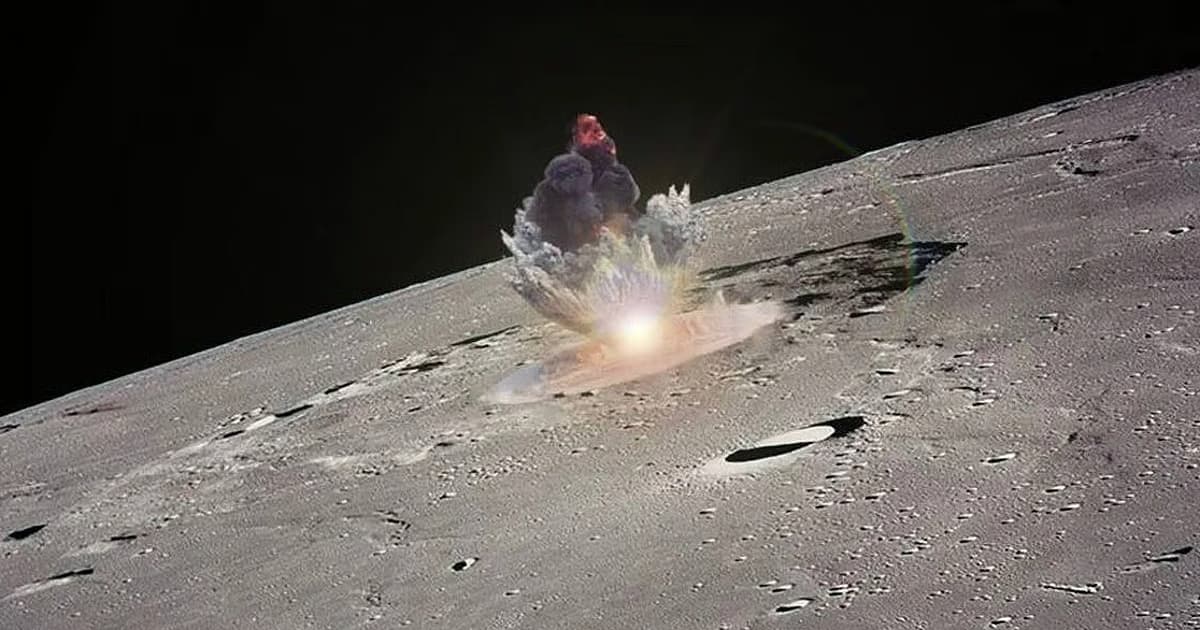
A discarded SpaceX Falcon 9 rocket stage has impacted the Moon, drawing renewed attention to the growing challenge of managing space debris beyond Earth’s orbit. Astronomers had tracked the object for months before confirming its collision with the lunar surface.
The rocket stage was no longer under active control after completing its original mission, eventually drifting into deep space before its trajectory intersected with the Moon. While the impact posed no immediate danger, scientists say it highlights the need for better long-term planning as lunar exploration accelerates.
Space agencies and private companies are preparing dozens of new missions to the Moon over the coming decade, increasing concerns that abandoned spacecraft and rocket components could create hazards for future operations.
Experts argue that establishing international standards for disposing of spacecraft will become increasingly important as commercial space activity expands.
Why It Matters For SpaceX & Space Enthusiasts
Unlike Earth, the Moon has no atmosphere capable of burning up incoming debris. As a result, discarded spacecraft and rocket stages can remain in lunar orbit or eventually collide with the surface.

ALSO READ: Historic Skyroot Vikram 1 Launch: India’s First Private Orbital Rocket Lifts Off
SpaceX’s Falcon 9 has become one of the world’s most frequently launched rockets, supporting satellite deployments, cargo missions and crewed flights. The broader issue of space debris has emerged as a major challenge for governments and private companies as thousands of satellites and spacecraft enter orbit each year.