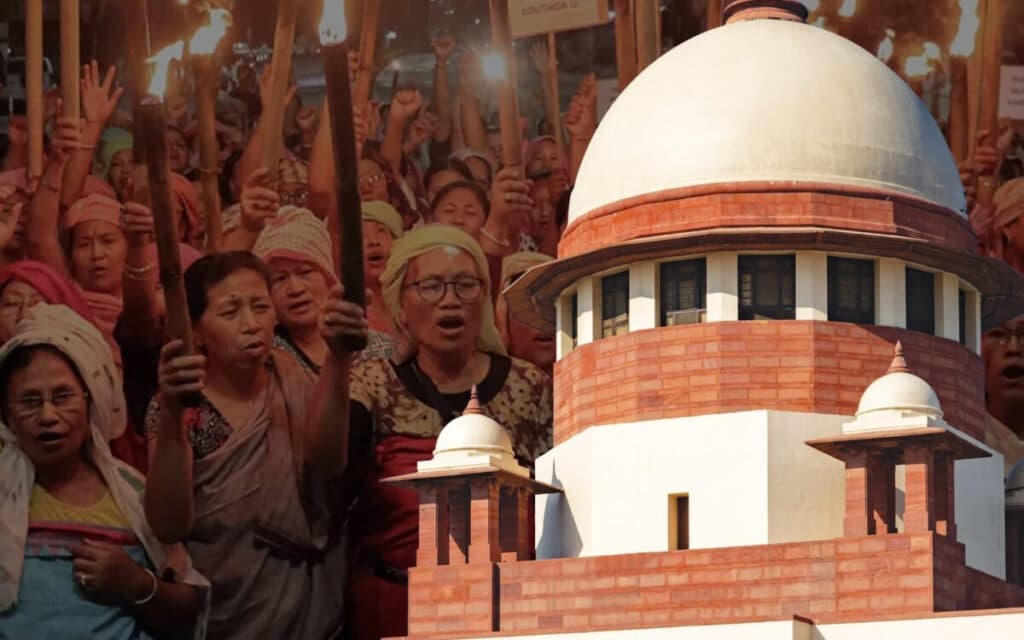
NEW DELHI: In a bid to expedite justice for victims of the devastating ethnic conflict that tore through the northeastern state, the Supreme Court of India has proposed the establishment of designated special courts to handle cases stemming from the 2023 Manipur violence.
The directive came on Friday, July 24, 2026, during a high-profile hearing led by Chief Justice of India (CJI) Surya Kant. The apex court expressed deep concern over the slow pace of ongoing investigations and judicial proceedings, stressing the urgent need for a dedicated legal mechanism to prevent further trauma for the victims and their families.

Expediting the Legal Process
During the proceedings, CJI Surya Kant highlighted that standard court dockets are already severely backlogged, and adding complex, highly sensitive cases from the Manipur conflict could lead to an “inordinate delay” in delivering justice. To circumvent this, the bench proposed setting up specialized trial courts in neighboring Assam to hear the CBI-transferred Manipur violence cases on a strict day-to-day basis.
The Supreme Court directed the central investigating agencies, particularly the Central Bureau of Investigation (CBI), to radically expedite their remaining probes, finalize their charge sheets, and submit them promptly. The CJI emphasized that transferring the trials to special courts outside Manipur would also help ensure the safety of witnesses and maintain the absolute impartiality of the judicial process, away from the immediate epicenter of the ethnic friction.

ALSO READ: Supreme Court Rejects NEET Protesters’ Urgent Hearing Plea Over Police Brutality
Parallel Action on Education Fraud
In a completely separate but similarly themed judicial development emphasizing speedy trials, the Bombay High Court took proactive steps regarding the ongoing nationwide examination crisis. On Thursday, the High Court formally designated two special courts within its jurisdiction specifically to hear criminal cases tied to the recent NEET-UG paper leaks and educational fraud syndicates.
These parallel judicial interventions highlight a growing consensus among India’s top courts that specialized, fast-tracked legal frameworks are necessary to handle major crises that deeply impact public trust and national stability.