TOKYO: A powerful and devastating earthquake struck Japan’s southern island of Kyushu late Tuesday afternoon, July 28, 2026, plunging the region into chaos and triggering frantic rescue operations. The Japan Meteorological Agency (JMA) confirmed that the quake registered a magnitude of 7.1 (Mw 6.8 by the USGS), with the epicenter located at a shallow depth of 10 kilometers near Uki City in Kumamoto Prefecture.
Japan Earthquake: Devastation at the Aeon Mall
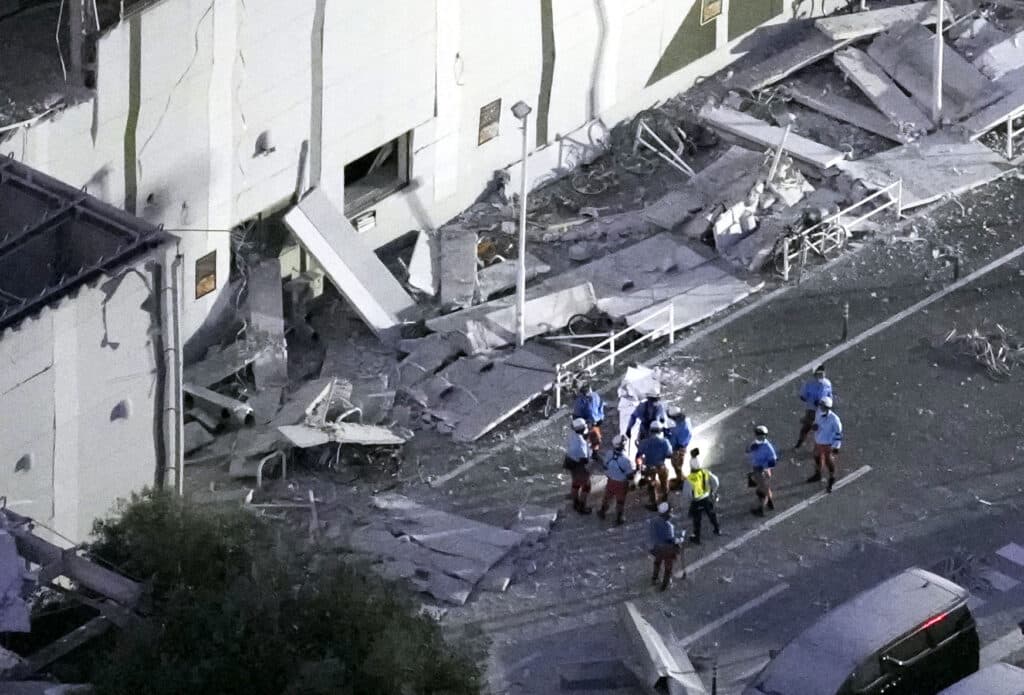
The sheer force of the tremors caused severe structural failures across the prefecture, but the most alarming situation is currently unfolding in Kashima Town. Local broadcasters and emergency services reported that the second floor of the massive Aeon Mall Kumamoto completely collapsed during the violent shaking. Adding to the catastrophe, a massive explosion rocked the shopping center shortly after the collapse, sending a massive plume of black smoke into the sky.

Emergency responders fear a “considerable number” of people are trapped or deceased within the mall’s ruins. Police officials stated that between 20 and 30 mall employees, along with an unknown number of civilian shoppers, remain unaccounted for. At least 54 people were injured in the mall blast alone, severely straining local medical facilities.
ALSO READ: Supreme Court Rejects NEET Protesters’ Urgent Hearing Plea Over Police Brutality
Infrastructure Crippled and Tsunami Alert Lifted
Immediately following the earthquake, the JMA issued a tsunami advisory for waves up to 1 meter along the coastlines of the Ariake and Yatsushiro seas. Fortunately, the advisory was officially lifted within two hours after no significant sea-level abnormalities were observed.

The terrestrial damage, however, is immense. Japan’s Prime Minister Sanae Takaichi immediately took to X (formerly Twitter) to confirm that the central government has established an emergency task force to coordinate rescue operations and assess the rapidly evolving disaster. Prime Minister Takaichi warned residents to remain highly vigilant against fires and broken glass, as large swathes of the region have been plunged into darkness. Utility provider Kyushu Electric Power reported that over 45,000 households are currently without power.
Transportation networks have been entirely paralyzed. JR Kyushu immediately suspended all rail services, including the vital Shinkansen bullet trains, after a freight train derailed near Yatsushiro Station. Furthermore, reports indicate that the historic stone walls of Kumamoto Castle—which had painstakingly undergone 10 years of reconstruction following the deadly 2016 Kumamoto earthquakes—have sustained fresh, heartbreaking damage.
The Japanese Defense Ministry has dispatched military aircraft to conduct aerial assessments as aftershocks continue to rattle the shattered prefecture.