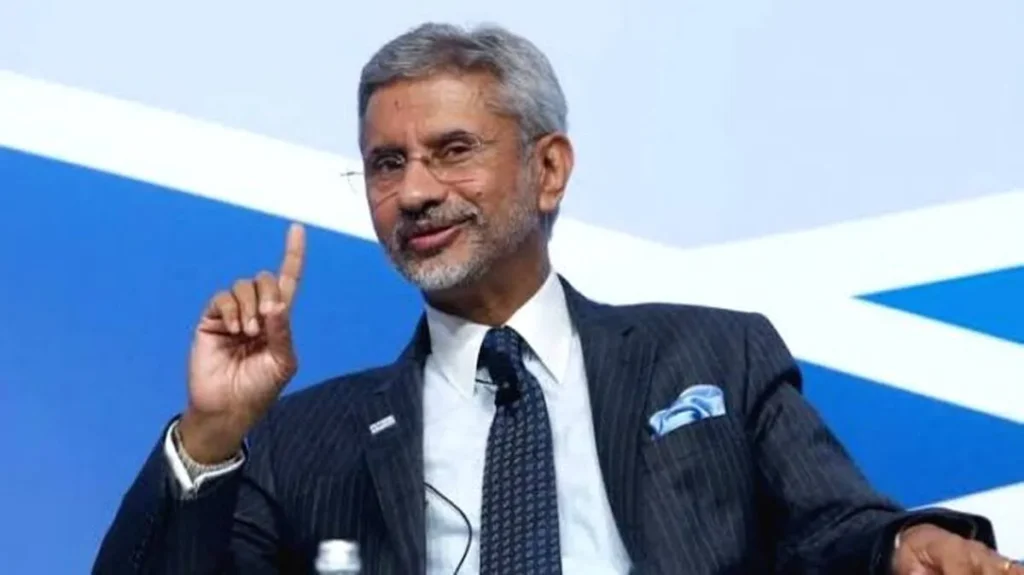
India has delivered a blunt message amid growing international pressure over its continued purchase of Russian oil. External Affairs Minister S. Jaishankar, speaking in Kyiv on Thursday, defended India’s energy trade with Moscow and argued that stopping Russian oil purchases would not bring an end to the Russia-Ukraine war.
His remarks came during his visit to Ukraine, where he met Ukrainian Foreign Minister Andrii Sybiha and President Volodymyr Zelenskyy as New Delhi seeks to play a greater role in efforts to end the conflict.
Jaishankar: Oil Purchases Won’t Decide the War
Responding to questions about whether India could reduce its Russian oil purchases under mounting Western pressure, Jaishankar said the conflict would ultimately be resolved through “dialogue, diplomacy and negotiation”, rather than decisions over oil, minerals or other commodities.
He also acknowledged Ukraine’s position on Russian energy purchases but stressed that India expects its own concerns to be respected.
The core argument from New Delhi is straightforward: India has to maintain energy supplies for 1.4 billion people, particularly at a time when global energy markets remain highly volatile.
ALSO READ: India Steps Into Russia-Ukraine Peace Push: Jaishankar Arrives in Kyiv as Modi Talks to Putin
India Pushes Back Against Western Pressure
India’s Russian oil policy has increasingly become a source of tension with Western countries, particularly the United States. Washington has pushed for countries to reduce economic ties with Russia as part of efforts to pressure Moscow over the war. The latest US sanctions legislation has also raised the possibility of additional penalties targeting countries continuing to buy Russian energy.

But New Delhi has consistently argued that its energy purchases are driven by national interest, affordability and energy security, rather than political support for Russia.
India has also previously maintained that its oil imports are part of a diversified energy strategy. The government has said that suddenly removing a major supplier from the global market could contribute to higher international oil prices and greater volatility.
A Delicate Message in Kyiv
Jaishankar’s comments are particularly significant because they came from Kyiv itself.
India is attempting to maintain relations with both Moscow and Kyiv while encouraging a diplomatic solution to the war. Prime Minister Narendra Modi recently held talks with Russian President Vladimir Putin at the SCO summit and called for movement away from an “endless war” towards an end to the conflict.

During his Kyiv visit, Jaishankar also discussed attacks on commercial shipping in the Black Sea, including an incident in which five Indian seafarers were killed, as well as food security and freedom of navigation.
India’s Balancing Act
The Russian oil issue highlights the difficult balancing act facing Indian diplomacy.
New Delhi wants to preserve its longstanding strategic relationship with Moscow while simultaneously deepening ties with Ukraine, Europe and the United States.
Jaishankar’s latest message makes India’s position clear: New Delhi is willing to support peace efforts, but it is not prepared to accept the idea that cutting Russian oil purchases is itself a pathway to peace.
For India, the calculation remains one of strategic autonomy and energy security — while diplomacy, rather than economic pressure alone, remains the preferred route to ending the war.