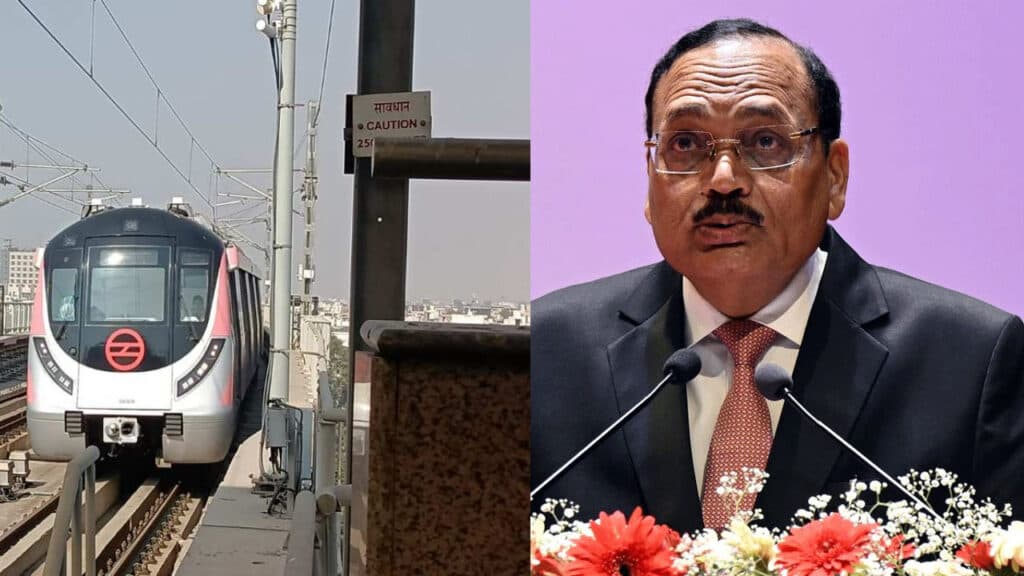
NEW DELHI: The ongoing youth protests in the national capital have severely disrupted daily life, and the impact has now directly reached the highest echelons of the Indian judiciary. On Thursday, July 23, 2026, Chief Justice of India (CJI) Surya Kant issued a stern warning that he would personally intervene if the authorities failed to resolve the massive logistical issues caused by the ongoing Delhi Metro closure.
CJI Hears After SCBA Raises the Alarm
The issue was brought directly to the CJI’s attention by Senior Advocate and Supreme Court Bar Association (SCBA) President Vikas Singh during a morning mentioning. Singh highlighted the severe hardships being faced by lawyers, litigants, and Supreme Court Registry staff who heavily rely on the public transit system to reach the court complexes.

Due to the intensifying protests led by the Cockroach Janta Party (CJP) at nearby Jantar Mantar, the Delhi Metro Rail Corporation (DMRC) had suspended entry and exit at 16 key metro stations across central Delhi, citing urgent security concerns. Among the heavily restricted stations were Lok Kalyan Marg, Rajiv Chowk, Patel Chowk, Mandi House, and the Supreme Court station itself.

Singh proposed a practical solution to the bench, suggesting that the station doors shouldn’t be completely shuttered. “In the metro, there is one advantage, that when they come out of the train, there is an exit point. There they can be screened,” Singh argued. He requested that individuals holding valid Supreme Court proximity cards or official Registry identification be permitted to exit the station after a standard security check, while unauthorized passengers could be instructed to remain on the train.
ALSO READ: Supreme Court Rejects NEET Protesters’ Urgent Hearing Plea Over Police Brutality
The Court’s Assurance
Understanding the gravity of the disruption, Chief Justice Surya Kant assured the Bar that the Supreme Court administration was already actively communicating with metro and police authorities to find a workable solution. The CJI stated, “If by lunchtime something does not happen to open it, I will intervene”.
To protect the interests of those trapped in the transit chaos caused by the Supreme Court Delhi Metro closure, the CJI also passed an immediate protective measure. The bench directed that no adverse judicial orders would be passed against any parties or lawyers solely due to their non-appearance in court that day, acknowledging that the transport disruptions were entirely beyond their control.