The Bombay High Court on Monday reprimanded actor Imran Khan over his participation in a protest against the Special Intensive Revision (SIR) of electoral rolls, observing that he was not an Indian citizen and could not be treated at par with Indian citizens.
The court asked Imran Khan, a United States citizen and Overseas Citizen of India (OCI) cardholder, to tender an unconditional apology and give an undertaking that he would not participate in such protests in the future. The actor subsequently tendered an apology and an undertaking before the court, according to reports.
The court observed that Khan was not “remotely affected” by the SIR exercise and questioned his decision to participate in the demonstration despite having lived in India for several decades.
View tweet
It also remarked that an Indian citizen committing a similar act abroad could face deportation to India, underlining the distinction between the rights of Indian citizens and those of foreign nationals holding OCI status.
ALSO READ: INDIA Bloc stages a protest against CEC Gyanesh Kumar
Why did the Bombay High Court question Imran Khan?
The court was hearing Khan’s petition challenging a ‘Leave India Notice’ issued by the Foreigners Regional Registration Office (FRRO), which had directed him to leave the country by October 28.
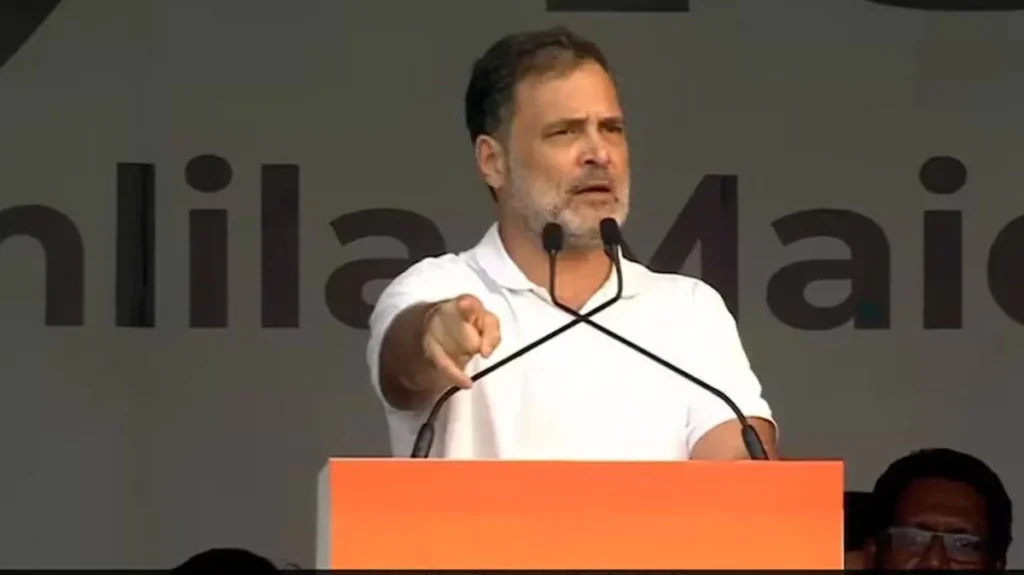
The notice followed his detention during a protest against Chief Election Commissioner Gyanesh Kumar at Mumbai’s August Kranti Maidan on October 10. The demonstration, organised by the Cockroach Janta Party (CJP), called for the CEC’s resignation over alleged irregularities in the SIR of electoral rolls.

During Monday’s hearing, the Centre argued that Khan, being a US citizen and OCI cardholder, could not exercise political rights available to Indian citizens.
Solicitor General Tushar Mehta, appearing for the FRRO, also submitted that Khan had considerable public influence and a significant following on social media, and was aware of the purpose of the protest.
Khan’s counsel told the court that the actor had no association with the organisers and offered to file an affidavit. The court indicated that an affidavit alone would not suffice and sought an unconditional apology.
How did the ‘Leave India’ notice controversy begin?
Imran Khan was detained by Mumbai Police during the October 10 demonstration. He was subsequently named in a complaint filed by BJP leader Kirit Somaiya, who alleged that the actor’s participation violated the rules applicable to OCI cardholders. The Mumbai Police forwarded an FIR to the FRRO, following which the immigration authority issued the notice on October 14, directing Khan to leave India.
Imran Khan challenged the order before the Bombay High Court, calling it unconstitutional, arbitrary and disproportionate. His legal team also questioned the process followed by the authorities.

On October 28, the High Court put the notice on hold, allowing him to remain in India while his petition was being heard. On Monday, the court continued the interim protection, keeping the notice in abeyance until December 7.
The court also questioned the FRRO over the absence of an opportunity of hearing before issuing the notice, particularly since Imran Khan had been living in India for more than four decades and had no known antecedents, as submitted before it.
ALSO READ:
What is OCI status?
An Overseas Citizen of India cardholder is not an Indian citizen. OCI status is granted to eligible foreign nationals of Indian origin and provides certain privileges, including a lifelong, multiple-entry visa to India.
However, OCI cardholders retain the citizenship of their respective countries and do not enjoy political rights reserved for Indian citizens, such as the right to vote or contest elections.
The case is expected to continue before the Bombay High Court as Khan challenges the FRRO’s direction to leave India.